
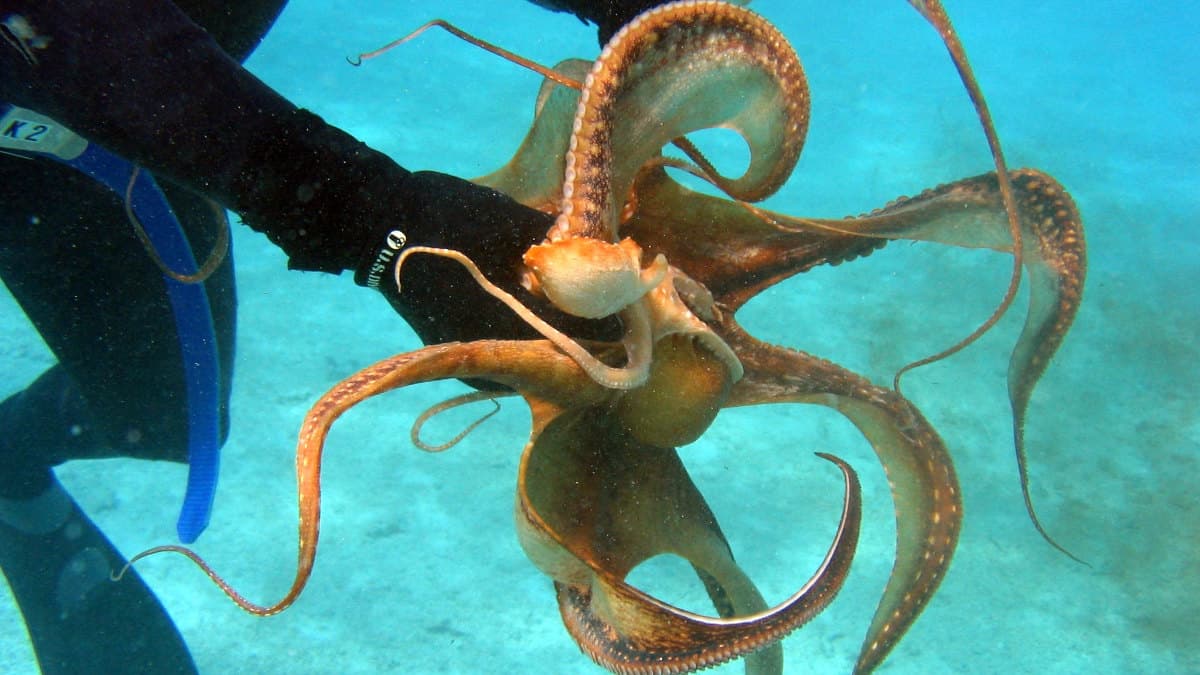
An octopus on an open patch of seabed may look pale and smooth. Against a darker, rougher background, its appearance can change dramatically. It is not putting on a new skin: specialized structures in the existing skin are changing what is visible. [1]
Tiny sacs of pigment
Many octopuses have pigment-containing structures called chromatophores. Muscles can expand or reduce the visible area of these small sacs. When more pigment is exposed, a region of skin looks different from one where the sacs are less expanded. [1]
A background becomes a disguise
The giant Pacific octopus provides a striking example. It can adjust its coloration and pattern as its surroundings change. Its eyes gather information about the scene, and its skin responds with a different appearance. [2]
Camouflage is not simply “turn the same color as a rock.” Light and dark areas, pattern size, and the outline of the animal also matter. A disguise works when the animal becomes harder to separate visually from its background. [1] [2]
The skin can change texture
Many octopuses can raise or flatten small muscular projections called papillae. This allows the surface to appear rougher or smoother. Texture and body posture can strengthen the disguise created by a changing pattern. [1]
A useful way to watch
In an octopus video, compare the animal before and after a change. Notice the edges of its arms, the patches across its body, and whether the surface looks smooth or bumpy. Looking for those separate features turns one impressive transformation into several mechanisms that can be observed individually.
Color change is therefore not one simple switch. It is a coordinated change in visible pigment, pattern, and, in many species, three-dimensional texture. [1]
Sources and image credit
1. Smithsonian Ocean: Octopuses, Squids, and Relatives
2. Monterey Bay Aquarium: Giant Pacific Octopus
Cover: Dwayne Meadows, NOAA/NMFS/OPR. Public domain. Resized and cropped or letterboxed to a 16:9 cover. Image source · Usage / license