
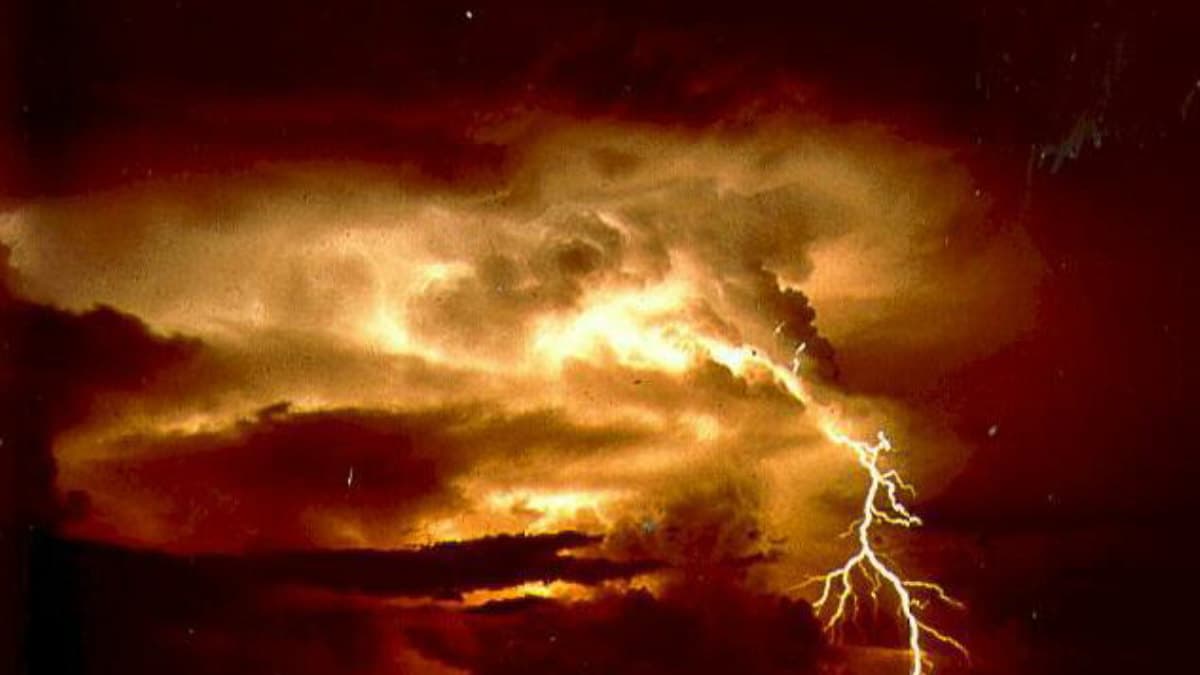
A storm can produce a bright flash, a noticeable pause, and then a deep rumble. The pause does not mean the thunder was created several seconds after the lightning. It mainly reflects the different travel speeds of light and sound. [1] [2]
Thunder begins with rapidly heated air
Lightning is an electrical discharge that heats the air along its path extremely quickly. The sudden heating makes that air expand, producing a pressure wave that travels outward. The sound associated with this event is thunder. [1]
Thunder is therefore not clouds colliding. It is connected to the rapid change in air around the lightning channel. [1]
Two signals, two speeds
Light travels vastly faster than sound. Across the distances involved in a nearby storm, the flash reaches the eyes almost immediately. The sound needs more time to cover the same distance, so it arrives later. [2]
A longer gap generally indicates a more distant lightning event. A very short gap means the sound has had less distance to travel. This comparison is a consequence of travel time, not a change in the order in which the storm produced the signals. [2]
Why thunder sometimes rumbles
A lightning channel can extend a long way through the sky. Sound from its different sections may travel different distances to the listener. Those arrivals, together with effects such as echoes, can stretch a sharp event into a longer rumble. [1]
A science clue is also a safety signal
Hearing thunder means a thunderstorm is close enough to take seriously. Do not stay outdoors to measure more flashes. Move into a substantial building or a fully enclosed hard-topped vehicle; an isolated tree is not safe shelter. [3]
The National Weather Service advises waiting at least 30 minutes after the last thunder before returning outdoors. The interesting gap between flash and rumble should never become a reason to delay seeking shelter. [3]
Sources and image credit
1. National Weather Service: Understanding Lightning — Thunder
2. Royal Meteorological Society: Thunder and Lightning
3. National Weather Service: Lightning Safety Tips
Cover: NOAA / National Weather Service. Public domain. Resized and cropped or letterboxed to a 16:9 cover. Image source · Usage / license