The 57 competencies set for Grade 5 Science, and every one has lessons behind it.
Matter and Changes of State
6 competencies
Describe matter as anything that has mass and takes up space.
Identify that matter exists in three states called solids, liquids, and gases.
Describe the properties of solids, liquids, and gases in terms of shape and volume.
Identify objects at home and in the classroom as solid, liquid, or gas.
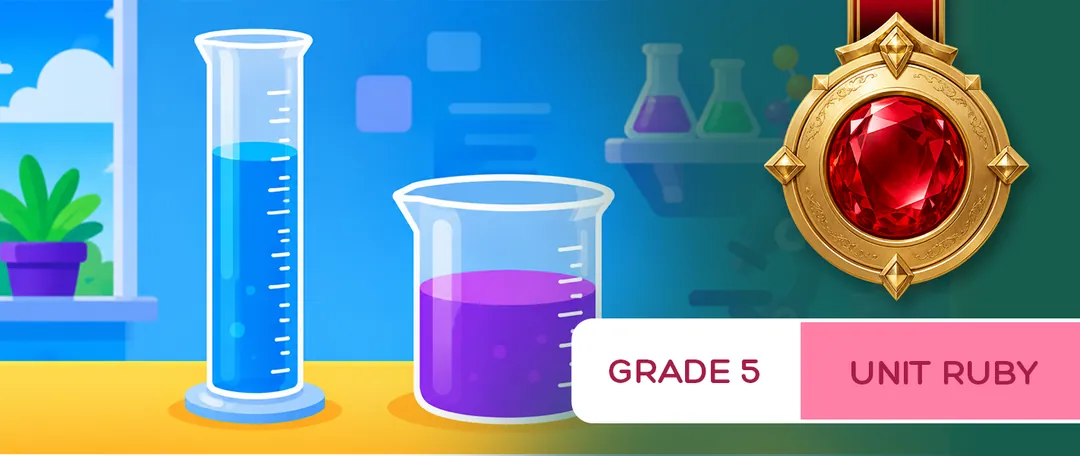
Use measuring cylinders or beakers to measure volume using units, such as milliliters and liters.
Describe how changes in temperature cause matter to change in state, such as solid to liquid to gas.
Scientific Investigations and Measurement
7 competencies
Describe the first step of a simple science investigation: What is the problem?
Describe the steps of a simple science investigation: What materials do you need? What do you need to do?
Use appropriate simple science equipment such as a balance and a thermometer.
Identify and appropriately use units in simple science activities, such as milligrams, grams, kilograms, and degrees centigrade.
Plan simple scientific investigations in answering questions such as “Do gases, like air, or liquids, like water, have mass?”
Plan and carry out a scientific investigation on a simple everyday problem such as “Do gases have weight?”
Describe what was found out or learned.
Classifying Living Things
4 competencies
Use a table to show how living things can be classified into groups based on similar characteristics.
Classify plants including flowering and non-flowering plants.
Classify animals including mammals, reptiles, insects, birds, fish, amphibians, and reptiles.
Classify microorganisms including fungi and bacteria.
Plant Structures and Adaptations
4 competencies
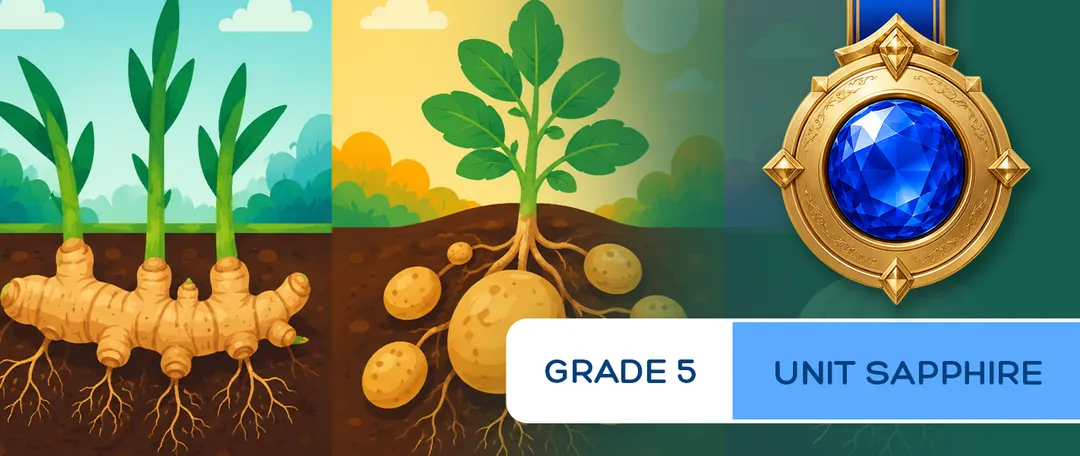
Describe the purpose of specialized structures in plants, such as rhizomes, tubers, and bulbs.
Describe the purpose of specialized structures in plants, such as thorns and aerial roots.
Explain how some plants have adapted to unfavorable conditions in the environment, such as lack of rain.
Explain how some plants have adapted to unfavorable conditions in the environment, such as floods.
Human and Animal Body Systems
5 competencies
Identify from pictures and labeled diagrams the parts of the digestive system as mouth, gullet, stomach, small intestine, and large intestine, and describe how they work.
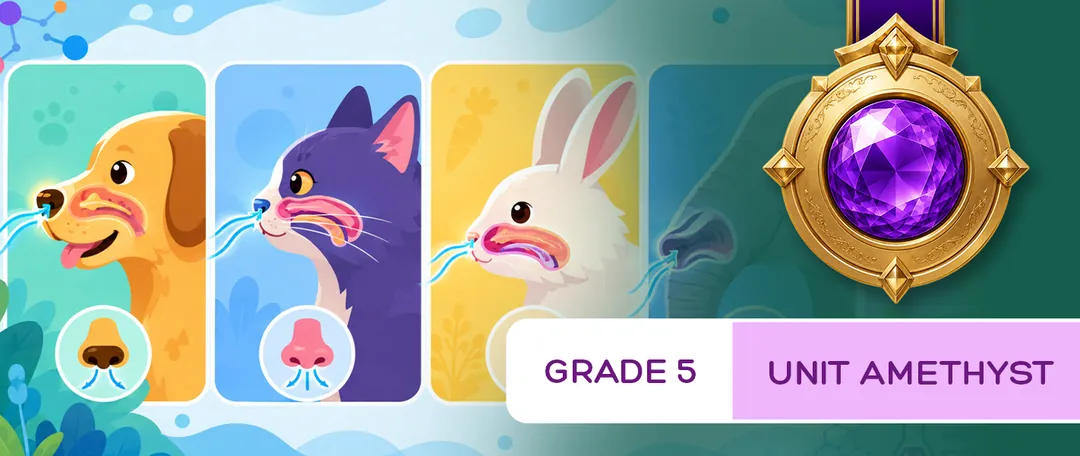
Identify from pictures and diagrams the parts of the respiratory system as the nose, windpipe, and lungs, and describe how they work.
Identify from pictures and labeled diagrams the parts of the female reproductive system as ovaries, uterus, and vagina and those of the male reproductive system as prostate, testis, and penis, and describe how they work.
Describe how digestive, respiratory, and reproductive system parts work.
Explain how animal systems help organisms grow, respond, and reproduce.
Reproduction and Life Cycles
3 competencies
Identify which groups of animals reproduce by giving birth to live young, such as mammals, and which reproduce by laying eggs, such as birds and reptiles.
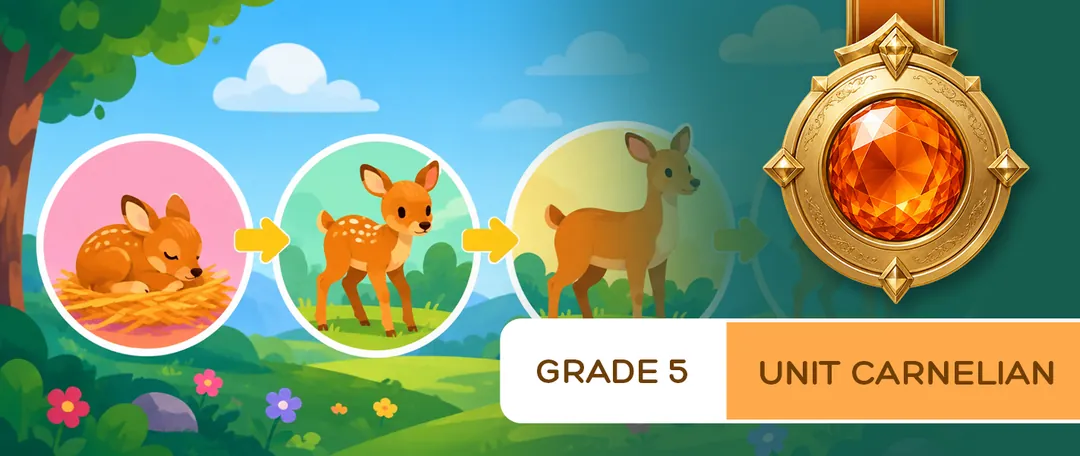
Compare the life cycles of mammals from birth to adulthood, birds from egg to a mature organism, and plants from seed to a young plant, and then to a mature plant.
Set up a simple science activity to observe and record the changes in plants as they grow from seed to maturity.
Animal Adaptations
1 competency
Use information from secondary sources to describe examples of how some animals have changed to better suit their environment, such as mimicry or camouflage.
Forces, Friction, and Gravity
8 competencies
Carry out simple investigations to demonstrate that contact forces cause objects to move in the same direction as the direction that the force is applied.
Plan and carry out a scientific investigation to determine the effect of different surfaces on the size of frictional forces.
Demonstrate how friction can produce heat and investigate ways of reducing and increasing friction.
Set up an inclined plane for toy cars and apply the concept of friction to stop the toy car as fast as possible after it moves past the inclined plane.
Identify gravity as a non-contact force that affects the behaviors of materials and objects on Earth in predictable ways.
Predict and explain whether heavier objects will fall faster than lighter objects due to the force of gravity.
Observe and describe the effects of gravity to the motion of an object.
Develop a graphic organizer to show similarities and differences between contact forces and non-contact forces.
Electricity and Magnetism
5 competencies
Investigate the effects of static electricity using common materials, such as a comb, plastic and glass rods, and balloons.
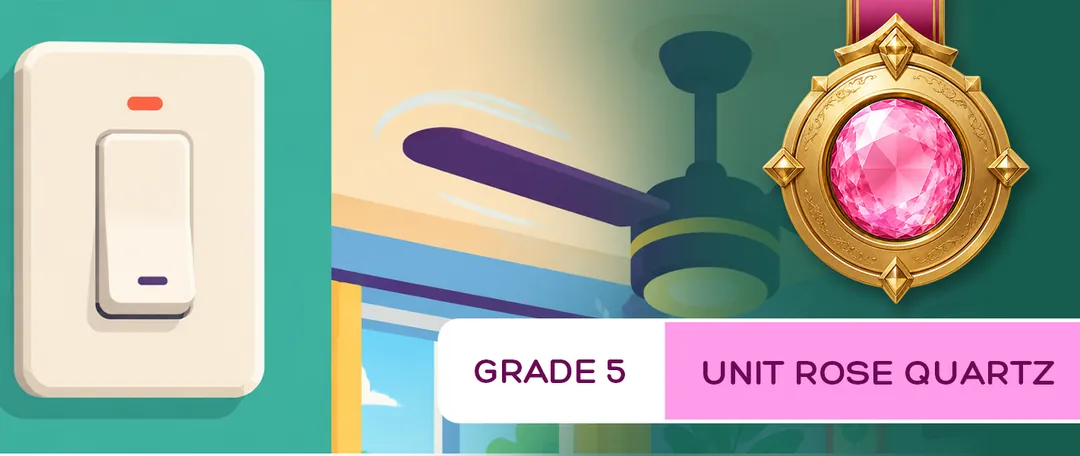
Assemble and draw a simple circuit using batteries, wires, switch, and bulb and/or toy motor or buzzer.
Design and construct a simple electrical circuit to identify what materials will conduct electricity and use it to identify materials from the environment that will and will not conduct electricity.
Develop a graphic organizer to compare and contrast conductors and insulators of electricity.
Make a simple electromagnet and observe and record its properties.
Landforms, Rocks, Soil, and Erosion
5 competencies
Identify local examples of natural landforms and bodies of water and describe how they influence non-living and living components of the environment.
Explore the school grounds or local area to observe or collect different types of rocks, describing similarities or differences in texture, color, and grain or crystal size.
Classify common rocks from provided samples using a simple rock classification system, such as a dichotomous key.
Explain how soil is formed from rocks and minerals.
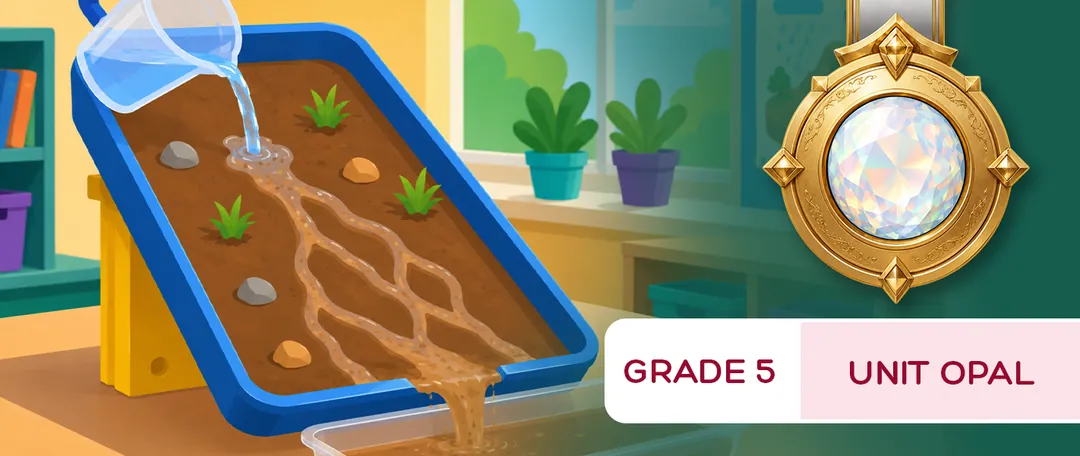
Demonstrate how erosion transports Earth materials.
The Water Cycle
2 competencies
Explain the role of the water cycle in the environment.
Construct a model to communicate some of the key processes in the water cycle.
Weather and Tropical Cyclones
4 competencies
Describe some effects of weather disturbances that occur in or near the Philippines.
Describe the weather conditions according to a Public Storm Warning Signal issued by PAGASA.
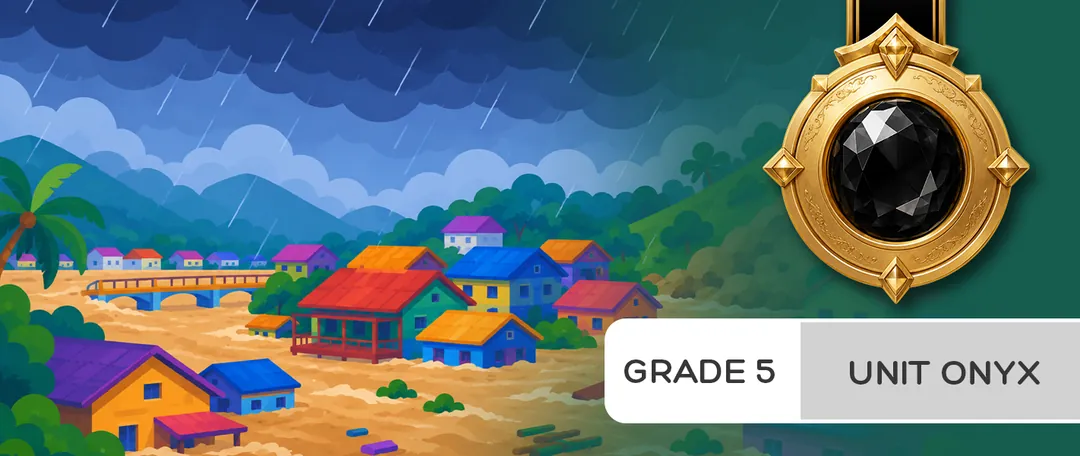
Describe typical weather conditions before, during, and after a tropical cyclone.
Create a video of a weather report or act out a TV weather broadcast segment explaining a weather disturbance.
The Solar System and Moon Phases
3 competencies
Describe the general structure of the Solar System, identifying the names of the major celestial objects, their main features, and general composition.
Make drawings or a simple model to show the motion of the Earth and Moon relative to the Sun to explain the phases of the Moon that people see from Earth.
Construct a scale model of the Sun and the inner planets of the Solar System showing the planets’ relative sizes and distances from the Sun.