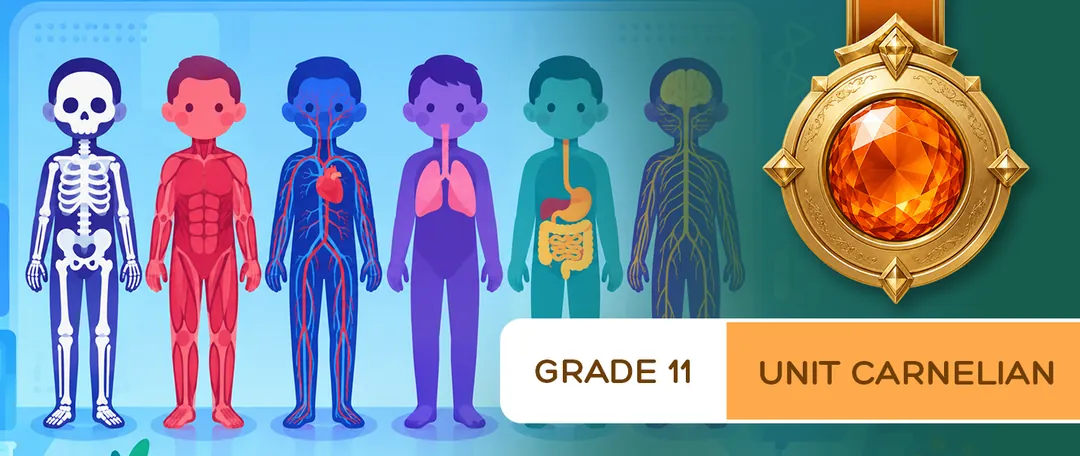
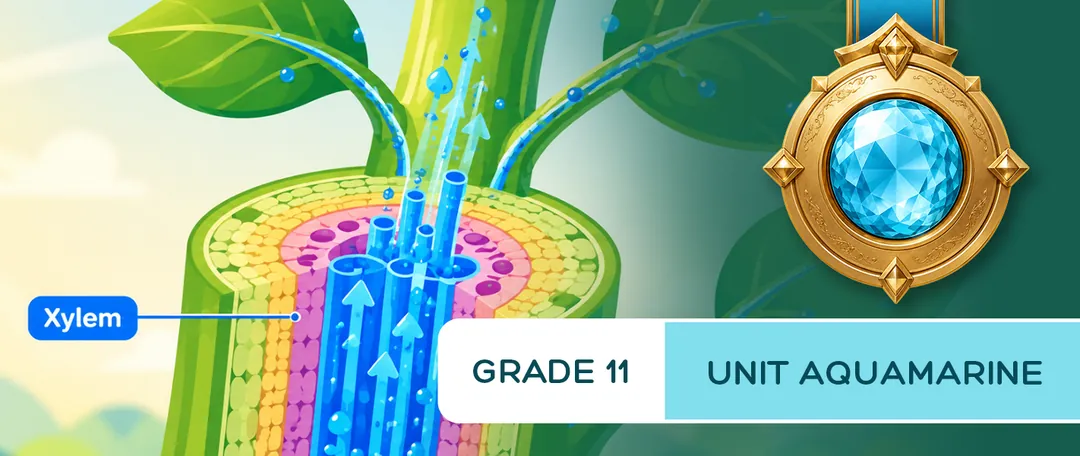
The 57 competencies set for Grade 11 Science, and every one has lessons behind it.
Physics in Everyday Life and Energy Safety
3 competencies
Identify various ways physics enhances our quality of life across different areas, including household activities, health and safety, work productivity, and leisure.
Discuss safety practices in dealing with electrical hazards, such as overloading, damaged insulation, damp electrical conditions, faulty wiring, and electrocution.
Propose ways to minimize energy loss and energy wastage in homes, schools, local businesses, and other parts of society.
Translational and Rotational Motion
6 competencies
Compare translational motion in terms of linear quantities.
Demonstrate through simple activities the relationship between motion and measurable quantities.
Compare rotational motion in terms of angular quantities.
Demonstrate through simple activities the relationship between angular quantities and real motion.
Compare and contrast translational and rotational motion in terms of their respective linear and angular quantities.
Demonstrate through simple activities the relationship between linear and angular quantities in human movement and ergonomic designs.
Simple Machines and Hydraulic Systems
6 competencies
Apply concepts of translational and rotational motion to simple machine design.
Explain the characteristics of efficient simple machines.
Apply concepts of translational and rotational motion to design and build prototypes of efficient simple and compound machines.
Explain the characteristics of efficient simple and compound machines.
Explain how simple hydraulic systems use fluid principles to enhance simple and compound machines.
Identify applications of Pascal’s principle in home, community, business, and transportation contexts.
Buoyancy and Floating
2 competencies
Identify applications of Archimedes’ principle in various contexts.
Design simple practical activities or models to determine how variations in shape, mass, and volume affect an object’s ability to float in a fluid.
Light, Sound, and Wave Technologies
2 competencies
Discuss properties of light and sound waves related to communications technology, navigation, medicine, and entertainment.
Identify innovations related to sound and light, such as soundproofing, sound amplifiers, LEDs, holograms, and lasers.
Chemistry, Health, and Product Safety
5 competencies
Use information from secondary resources to report how Louis Pasteur combined research from chemistry and biology, helping scientists understand the cause of some diseases and prevent infection.
Construct a table using product labels that describe the function of different substances, elements, or compounds in household and personal care products.
Explain the benefits and potential risks of using household and personal care products by considering chemical composition and human health effects, referring to relevant agencies such as DTI and FDA.
Explain the benefits and potential risks of using and disposing of household and personal care products by considering chemical composition, environmental impact, and human health effects, referring to DTI, FDA, and DENR.
Apply best practices in the proper handling, storage, and disposal of chemicals.
Chemical Reactions and Life Processes
4 competencies
Explain common types of chemical reactions and provide examples for decomposition, acid on carbonates, acids on metals, and combustion.
Identify chemical reactions that occur in daily activities, including baking, cleaning, and burning.
Use chemical equations to show biological and environmental processes such as photosynthesis and respiration.
Describe the chemical reactions that take place in body cells, referred to as metabolism, and explain their significance.
Solutions and Environmental Effects
3 competencies
Explain the characteristics of solutions and their examples in household products, industry, and environmental science.
Investigate how much salt dissolved in water will prevent the growth of a simple garden plant.
Create a table to show how solutions of saltwater and wastewater can affect local ecosystems and recommend ways to minimize their negative impact on the environment.
Cells and Organisms as Systems
5 competencies
Explain using photographs or videos of simple plants or animals as examples how life forms operate as systems of related parts working together.
Create a diagram to show the relationship between the structural components of a biological system and their functions.
Describe how cells obtain nutrients from food and convert them into energy through cellular processes to sustain life in plants and animals.
Describe how cellular processes sustain life in plants and animals.
Explain the role of cells in survival as preparation for organ-system interactions.
Plant and Human Organ System Interactions
4 competencies
Explain how various plant organs interact to facilitate the transport of materials throughout the plant system.
Describe how a damaged part in a system affects the organism using the case of a torn ACL and an asthma attack.
Explain how the nervous and endocrine systems work together to regulate body temperature in response to stimuli.
Explain how vaccines work by relating to the functions of the immune system and lymphatic system in protecting an organism against infectious diseases.
Climate Change, Biodiversity, and Population
5 competencies
Describe what is meant by climate change.
Describe how biological systems respond to climate change and contribute to understanding its effects on living organisms in the Philippines.
Explain how climate change impacts Philippine ecosystems.
Propose ways to adapt and mitigate the impacts of climate change on local biodiversity.
Analyze information from secondary sources to evaluate the adverse effects of overpopulation locally and globally.
Earth as a Habitable Planet
2 competencies
Explain the characteristics of Earth that support life in comparison with the other planets of the Solar System.
Describe how the greenhouse effect regulates Earth’s temperature, making it suitable for life.
Philippine Geology, Landforms, and Earth Materials
4 competencies
Demonstrate how the Philippine archipelago was formed.
Explain using suitable resources, including images, maps, and cross-sections, the unique landforms, climate, and life forms of the Philippine Archipelago that developed due to its geographical and geological location on Earth.
Describe the distinctive properties and local availability of earth materials, including rocks, minerals, and soils, and how they are harnessed to support human activities and industries.
Use evidence from secondary resources to describe how human activities have contributed to the modification of landforms and bodies of water of the Philippines since around 6,000 BCE.
Natural Hazards and Disaster Preparedness
6 competencies
Describe geological hazards such as volcanic eruptions, earthquakes, tsunamis, and landslides.
Describe hydrometeorological hazards such as typhoons, floods, and related hazards.
Describe slowly acting processes such as soil erosion and saltwater intrusion.
Assess geological and hydrometeorological hazards, including tropical cyclones, ipo-ipo, thunderstorms, coastal storm surges, and heat waves, in terms of risks and prevention and mitigation strategies.
Describe how PAGASA iHEAT maps provide Filipinos with the knowledge they need to take proactive measures to protect themselves from heat-related illnesses.
Develop family preparedness plans and community-based disaster risk reduction and management plans to prepare for, respond to, and recover from geological and hydrometeorological hazards that affect the Philippines.