The 76 competencies set for Grade 11 Math, and every one has lessons behind it.
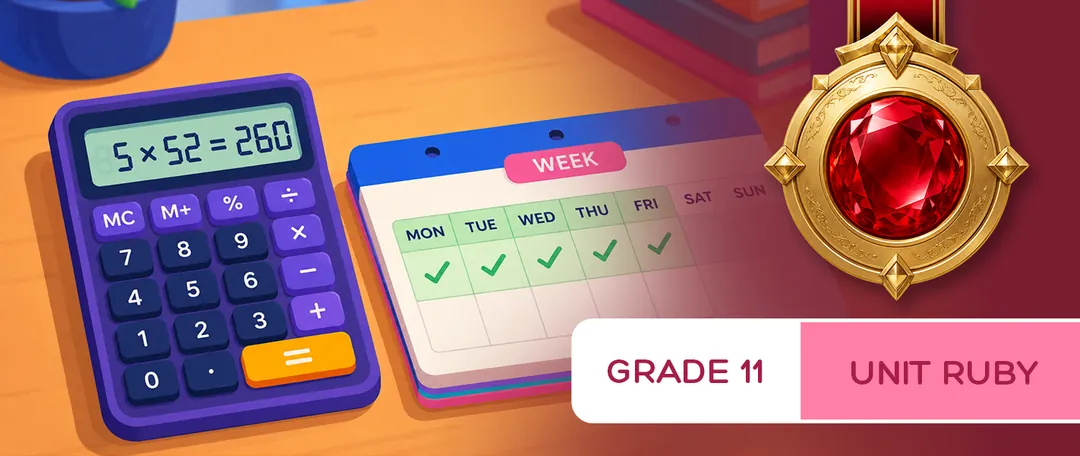
Income, Taxes, and Business Percentages
6 competencies
Calculate weekly or monthly wages from an annual salary, wages from an hourly rate, including situations involving overtime and other allowances, and earnings based on commission or piecework.
Apply a percentage increase or decrease in determining the impact of inflation on costs and wages over time.
Apply a percentage increase or decrease in calculating percentage mark-ups and discounts.
Apply a percentage increase or decrease in calculating VAT.
Apply a percentage increase or decrease in calculating profit or loss in both absolute and percentage terms.
Solve problems involving salaries, wages, benefits, and deductions, including tax computations, overtime pay, and gross and net incomes, using appropriate technology.
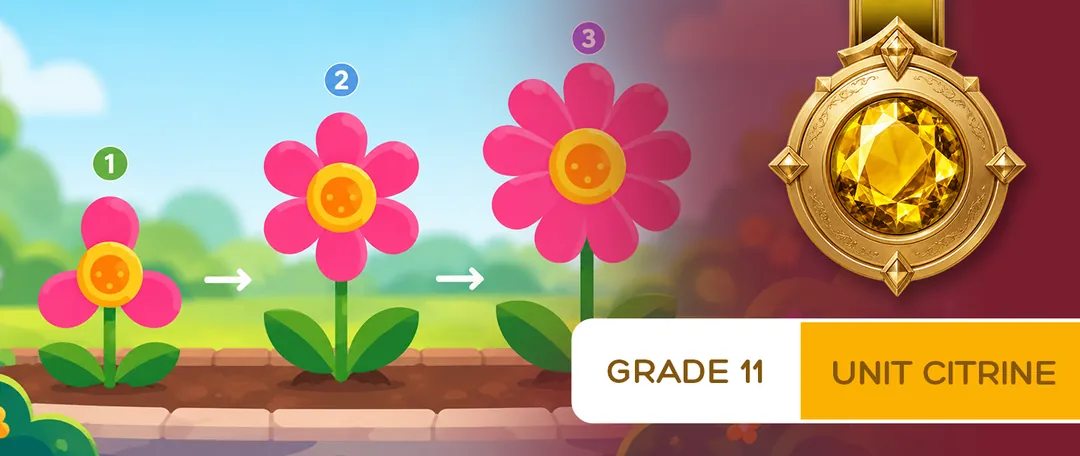
Patterns, Sequences, and Series
10 competencies
Describe patterns by inspection, including patterns in art and nature.
Determine the next term of a given pattern, including the Fibonacci sequence.
Identify the rule of a given pattern.
Illustrate the attributes of arithmetic and geometric sequences.
Solve problems involving arithmetic and geometric sequences.
Differentiate sequences from series.
Illustrate arithmetic and geometric series.
Represent series using sigma notation and vice versa.
Find the sum of arithmetic and geometric series.
Solve problems involving arithmetic and geometric series.
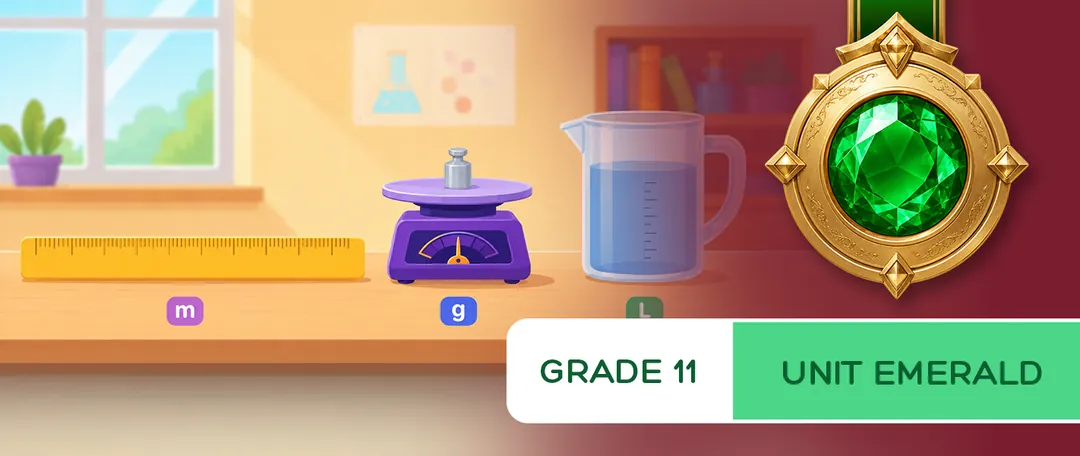
Units, Scale, and Conversions
6 competencies
Determine and apply the appropriate metric units for various contexts, such as units for small and large quantities and scientific measurements.
Convert measurements with different units in the same system and between different systems.
Use a scale to interpret and compare distances on maps, blueprints, and sketches.
Solve problems involving the conversion of currencies.
Apply time conversions in various real-world scenarios such as travel planning, project management, and daily routine schedules for personal and business transactions.
Apply temperature conversions to real-world scenarios such as recipe adjustments, weather reports, scientific experiments, storage conditions, and energy efficiency.
Area, Surface Area, Volume, and Capacity
6 competencies
Determine the surface area of three-dimensional objects, such as prisms, pyramids, cylinders, cones, spheres, and combinations of these.
Calculate the volume of prisms, pyramids, cylinders, cones, spheres, and combinations of these.
Estimate and measure lengths and distances, such as floor dimensions and measuring fabric for clothing.
Calculate the area and perimeter of residential spaces, such as room renovations and garden layouts.
Calculate the volume and capacity of three-dimensional objects, such as water tanks, rice storage containers, and balikbayan boxes.
Apply volume and capacity in cost estimation, such as calculating the amount of flour needed for bread production or paint needed for walls.
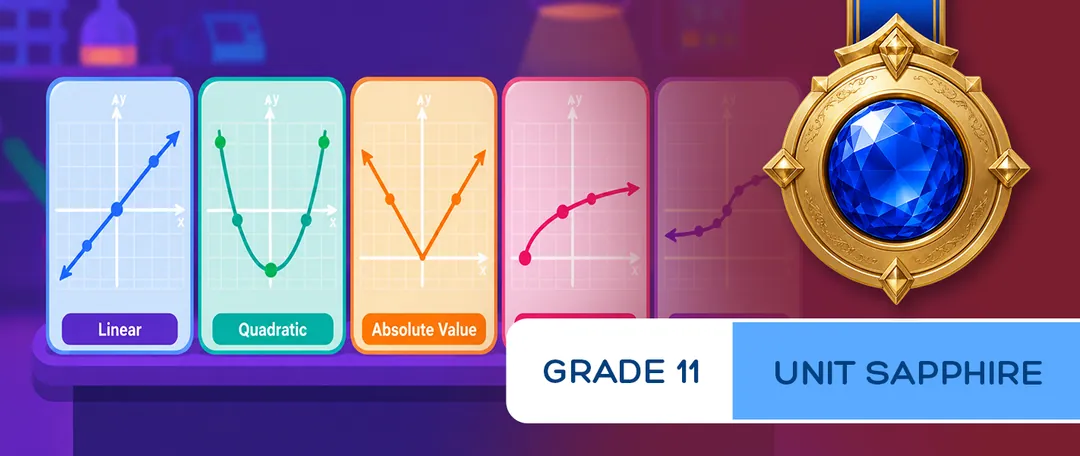
Functions and Their Graphs
4 competencies
Classify functions based on their graphs and/or equations to determine if they are linear, absolute value, quadratic, square root, or cube root.
Sketch the graph of linear and absolute value functions with or without technology.
Sketch the graph of quadratic, square root, and cube root functions with or without technology.
Apply linear, absolute value, quadratic, square root, and cube root functions to model and solve real-life problems.
Piecewise Functions
2 competencies
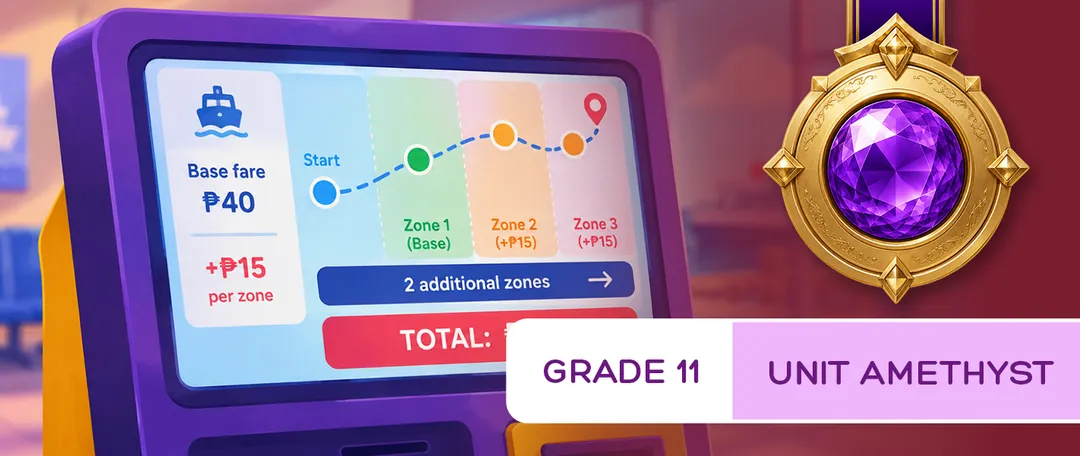
Illustrate a piecewise function in practical contexts, including fare rates, purchasing, and income tax.
Classify a given set of data according to its level of measurement.
Identify the appropriate measure of central tendency and measures of variability of a given data set for different purposes.
Use appropriate technologies to calculate measures of central tendency and variability.
Interpret the computed measures of central tendency and variability.
Triangle Trigonometry and Applications
5 competencies
Illustrate the trigonometric ratios in a right-angled triangle using a real-life object or figure.
Illustrate the area of oblique triangles using Heron’s Formula and the rule Area = ½ab sin C.
Solve practical problems involving right and oblique triangles.
Solve practical problems involving angles of elevation and depression.
Solve practical problems involving the use of bearings in navigation.
Random Variables and Normal Distribution
6 competencies
Differentiate between discrete and continuous random variables and describe their uses.
Calculate the expected value, variance, and standard deviation of discrete random variables.
Illustrate a normal random variable and its characteristics.
Convert a normal random variable to a standard normal variable and vice versa.
Compute probabilities and percentiles involving the standard normal distribution using a Z-distribution table or appropriate technologies.
Solve problems involving normal distribution.
Sampling and Sample Size
3 competencies
Illustrate random sampling.
Determine the appropriate sample size for a specific investigation.
Distinguish between parameter and statistic, and probability and nonprobability sampling techniques.
Compound Interest and Annuities
6 competencies
Apply sequences and series to solve financial problems, such as periodic payments for loans and mortgages.
Determine the accumulated values of investment over time using sequences and series.
Solve problems involving compound interest, including maturity value, future value, nominal rates, and number of terms.
Illustrate simple annuity, general annuity, and deferred annuity.
Solve problems involving annuities.
Calculate the fair market value of a cash flow stream that includes an annuity.
Loans, Amortization, and Mortgages
2 competencies
Differentiate between business and consumer loans and their characteristics, such as repayment terms, requirements, purpose, and interest rates.
Solve problems involving business and consumer loans, including amortization and mortgages.
Hypothesis Testing for Population Means
5 competencies
Illustrate the null hypothesis, alternative hypothesis, level of significance, and types of error.
Formulate the null and alternative hypotheses of a given problem.
Determine the level of significance and types of error appropriate to a given hypothesis.
Test hypotheses for one and two population means using technology employing the z-test for known standard deviation, z-test for unknown standard deviation, one-sample t-test, independent samples t-test, and paired samples t-test.
Conclude from the results of hypothesis testing on one and two population means using t-test and z-test.
Scatter Plots and Correlation
4 competencies
Construct a scatter plot and estimate the strength of association between variables.
Draw the line of best fit for a scatter plot.
Determine the degree of relationship between two variables using Pearson’s r correlation.
Conclude from the results of hypothesis testing on relationships using Pearson r correlations.
Propositional Logic
6 competencies
Identify logical propositions.
Differentiate simple from compound propositions.
Illustrate basic logical operations.
Illustrate the different forms of conditional propositions.
Illustrate different types of tautologies and contradictions using practical situations.
Determine the truth values of propositions in a practical situation.